Untapped Potential of Birth
An emotional stream of thoughts about birth, intuition, hormones, and the things that should help but often get in the way instead.
Greta Nakliudaite-Perez
1/30/20255 min read
If you're more into listening than reading, you can find an audio recording of me reading this in my Substack. The subscription is free to listen -> Untapped Potential of Birth (with AUDIO)
Birth… such a special phenomenon – it can transform and empower more than ayahuasca in the Amazon jungle or even ten days of Vipassana.
How sad, then, that most women simply endure their birth experience.
Well, the most important thing is that the baby is healthy.
Raising that healthy little baby is a much greater challenge than giving birth. Especially if you don’t listen to your body and intuition, but instead try to raise them according to the instructions from the umpteenth online course you found on Instagram, the one that promises to turn your child into a genius.
Pregnancy and birth take your intuition through a growth spurt, preparing you for motherhood in turn. This doesn’t mean that if your birth didn’t go as you wished, you won’t be able to parent well. No. But if, during the journey of pregnancy and birth, you’ve already smothered your innate instincts with the cushion of a fear-feeding system, disarmed yourself completely, and became a passive observer of the process, then in motherhood—especially the beginning of it—it may also be much harder.
It’s a big challenge to talk about this calmly. When I hear birth stories, my blood starts to boil—my cheeks and chest flush, my heart races, and I just want to shout out the unending stream of rebellious thoughts in my head. Often I swallow my words and just smile, letting only a few slip through—“they lied to you, I’m sorry…”
Natural, physiological birth is a process made up of many tiny elements—a wide river whose flow is shaped by all the rushing hormonal streams feeding into it. Throw branches into one of the streams, and the flow of the whole river changes.
In birth, those “branches” can be so many common interventions—induction, augmentation, pain relief drugs, etc. Hormonal flow can also be disrupted by less obvious factors—leaving your home, getting into a car during contractions, strangers nearby, bright lights, intrusive noises, paperwork, clocks, talking, fearmongering, and so on. These activate the modern part of the brain—the neocortex—while optimal hormonal flow depends on the activity of the primitive brain. Is that why it seems that other mammals have an easier time giving birth than humans?
How many times have I heard this story: feeling fine and unsuspecting, a first-time mom goes for a check-up… It’s the 39th (or 40th, or 41st…) week of pregnancy. Naively, she expects to return home after a short visit, but the doctor doesn’t let her leave: “Better stay here, there’s not much amniotic fluid left, the baby is big, it would be good to give birth now. We’ll need to induce (well—‘kickstart’) the labor.”
Based on an ultrasound (the safety of which—despite its popularity—is questionable), they estimate the baby weighs almost five kilograms—huge—so better deliver quickly. Just in case.
Of course, even though this unexpected turn is stressful, one must trust the doctors, therefore the mother-to-be gets admitted to the hospital. She and her not-yet-ready baby are “induced” with Pitocin - a synthetic form of oxytocin. Oxytocin is one of the most important birth hormones, but its synthetic version, unfortunately, does not work the same way as the natural one. It doesn’t trigger other important hormonal responses—such as beta-endorphin, the body’s own painkiller.
Labor was successfully initiated, but the pain grew stronger and stronger, while the body’s natural painkillers weren’t activated. The pain became unbearable. The first-time mother wanted a natural birth, but the contractions brought on by Pitocin hurt so much that she finally asked for what she really didn’t want—an epidural.
She endured, and somehow—gave birth. The baby weighed barely three kilograms instead of the predicted five, and the mother only later realized she had torn badly, because while pushing—without feeling half her body—she didn’t fully sense her body’s limits or capabilities.
“The most important thing—the baby is healthy!”—said everyone who cared, and the mother, ignoring her strong gut feeling that something wasn’t right, tried to convince herself as well that if the baby was healthy, she had to feel nothing but joy. Maybe she integrated the experience successfully—or maybe she developed postpartum depression…
This is an example of some of the lighter stories. Here the birth didn’t end in a C-section (a major abdominal surgery), nor was there obvious obstetric violence (both happen far too often). But even this mother, who was relatively “lucky” and not completely traumatized by the system, lost the chance to experience birth as nature designed it to be.
Transformative, empowering, inspiring, ecstatic.
I’m not just throwing around Conscious Community buzzwords here. I had two births of my own that I could describe with these words (birth stories below), but in real life—not the online world—I often stay quiet about them because they don’t fit into the context of others’ painful stories and can be triggering.
Why am I sharing here? Because I really want more people to question the established norms.
Routine medicalization of birth harms not only mothers but babies too.
Imagine yourself in a baby’s skin…
How does it feel to be born drugged, unable to open your eyes due to blinding lights, feeling stranger’s hands with rubber gloves hold you, searching for your mother’s scent while someone pricks you with needles and drips antibiotics into your eyes?
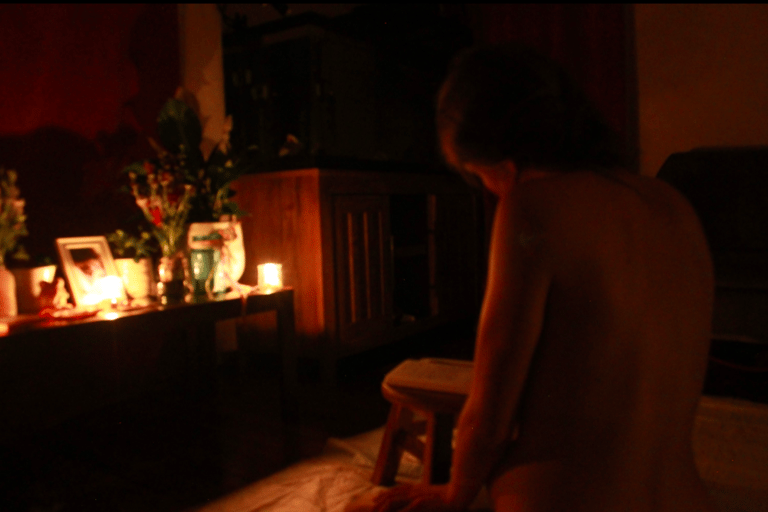
And how completely different to emerge in gentle twilight into your mother’s or father’s soft arms, immediately smell the familiar scent, look into the most loving eyes, and curl up safely and warmly on your mother’s chest?
I’m sorry if you too were lied to.
But I no longer apologize for saying this:
Experiencing a completely natural birth in a medical institution is very unlikely.
Not entirely impossible, but… Physiological birth is primitive and wild—the system does not understand such things and is afraid of them.
The vast majority of medical institutions and the people who work there simply don’t know what physiological, natural birth is or how it works. They spent years learning not about the fundamentals—natural birth hormones and how to support their smooth flow—but about pathologies and birth in captivity. If there are no pathologies—they create them. Then it’s easier to work with what’s familiar.
Is natural birth the very best option? It’s just one option—every birth path is sometimes needed. Still, if birth as it was designed by nature is what you desire—think a bit about what I’m saying here.
And another thing: no, the decision to give birth at home does not come from being naive, ignorant, or not knowing about risks. And not from rejection of science or fear of hospitals either. On the contrary—most of the home-birthing women I’ve met are educated, modern individuals who prepared for birth far more thoroughly than those who just trust whatever the doctors say. If you understand how physiological birth works, you also understand how many dangers lie in medical institutions. Choosing different places and different helpers simply means choosing different risks.
Birth without risk—just like life—does not exist.
I know there are cases where wonderful doctors and wonderful midwives don’t interfere when they don’t need to. And that is wonderful.
P.S. I am not condemning all doctors and all hospitals. It’s wonderful that they exist—when they are truly needed.
Pregnancy and birth experiences change your whole life. Inevitably… More than new clothes, a new car, or even a new house. So investing—your time, yourself, your money—into preparing for the birth experience simply pays off.
***
My first birth story: Pranas' Birth Story
My second birth story: Tumas' Birth Story